
How to fix wall damage after taking down holiday decorations
Taking down Halloween decorations? Learn how to fix tape peels, tack holes and hook holes in one afternoon: patch, sand and paint with a single bottle.
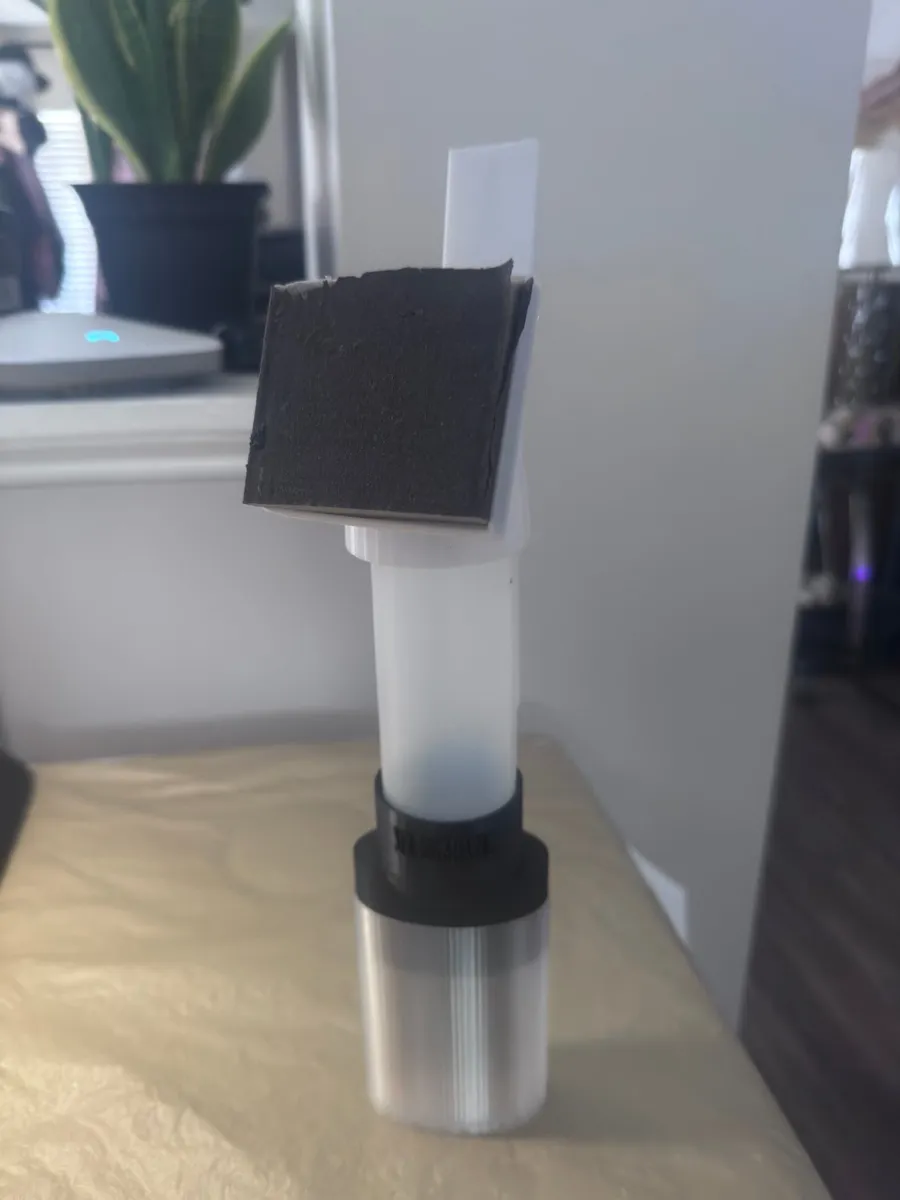
Halloween is almost here, and soon the decorations come down. The trouble is that tape, adhesive hooks, thumbtacks and little nails often leave something behind: a peeled patch of paint, a row of pin holes, or a dent where a hook pulled loose. And in a few weeks the fall and winter decorations go up, so it is a good time to fix the walls once and start fresh. Here is how to repair the most common decoration damage in one afternoon, without a toolbox or a full can of paint.
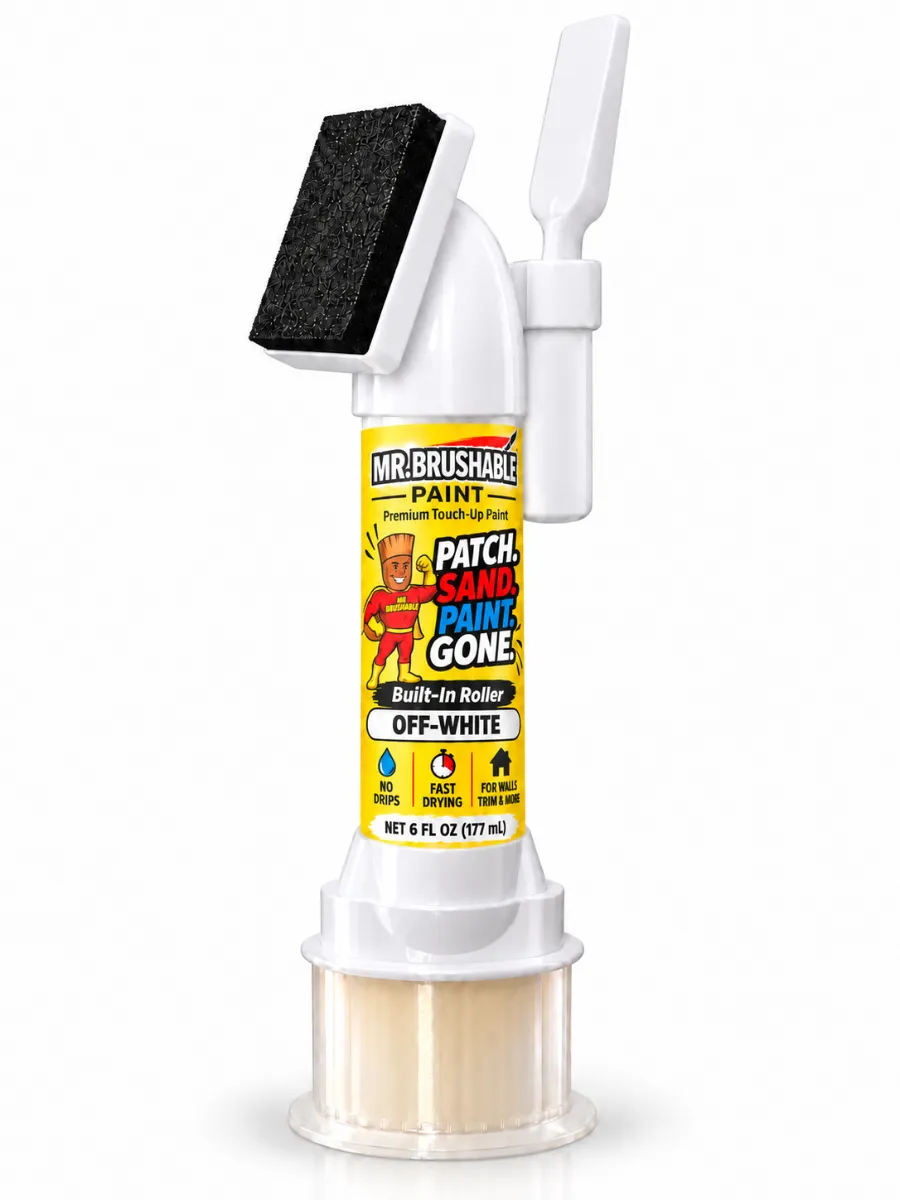
Shop this bottle →
What decorations do to your walls
Most seasonal damage falls into four groups. Knowing which one you have tells you which steps to follow.
- Pin and tack holes: tiny holes from thumbtacks and push pins holding garlands, banners and paper cutouts.
- Nail and small hook holes: slightly larger holes from finishing nails or small screw-in hooks used for wreaths and lights.
- Peeled paint: a shallow patch where tape or an adhesive strip pulled the paint (and sometimes the paper face of the drywall) off with it.
- Sticky residue and scuffs: leftover adhesive, plus marks from ladders, bins and props bumping the wall.
Take decorations down the gentle way first
Prevention saves a lot of patching. Before you pull anything off the wall:
- Pull adhesive strip tabs slowly and straight down along the wall, not out toward you.
- If tape or a hook will not let go, warm it for 20 to 30 seconds with a hair dryer on low to soften the adhesive, then peel slowly.
- Pull tacks and nails straight out so you do not tear a bigger hole.
- Wipe off any leftover residue with warm, soapy water on a soft cloth, and let the wall dry before you repair it.
How to fix decoration damage, step by step
- Walk the room and mark every spot. Look at the wall from an angle with a light behind you. Small holes and shallow peels are much easier to see this way. A small piece of painter's tape next to each spot keeps you from missing one.
- Clean and trim. Wipe each spot and let it dry. For peeled paint, gently trim away any loose flakes so the edges lie flat. If the brown paper inside the drywall is showing, a light coat of primer over that paper before you patch helps keep it from bubbling.
- Patch. Use the spackle and the spatula on the side of the Repair Kit bottle to fill each hole and shallow peel. Press it in, then scrape across the surface so the patch is level with the wall. Pin holes need only a dab.
- Let it dry completely. Give the spackle the full drying time on the label. Deeper spots may shrink a little as they dry; if one sinks, add a second thin layer and let it dry again.
- Sand smooth. Flip up the sanding sponge on top of the Repair Kit and buff each patch until you cannot feel the edge with your fingertip. Wipe away the dust with a barely damp cloth.
- Paint. Squeeze the Repair Kit bottle to feed paint into the built-in roller in its base, then roll over each patch. Roll a little past the edge of the repair and feather it out with light pressure so there is no hard line.
- Check it in daylight. Once it is dry, look again from an angle. If a patch still shows, roll on a second light coat.
Fixing scuffs and marks without patching
Getting the color right
Plan ahead for the next round of decorations
- Reuse the same holes. If you hang a wreath or garland in the same place every year, leave that one small hole open over the season instead of patching it twice.
- Hang lightweight items from trim, curtain rods or furniture instead of the wall when you can.
- Keep the Repair Kit with your decoration bins so it is ready when everything comes down again.
FAQ
Can I paint right over a peeled spot without patching it?
Usually not. A peeled spot is lower than the paint around it, so paint alone will leave a visible dip with a ridge around the edge. A thin layer of spackle, sanded smooth, levels it first so the paint blends in.
How do I remove sticky tape residue without damaging the paint?
Use warm, soapy water and a soft cloth, and rub gently. Avoid harsh solvents and scrubbing pads, which can dull or lift the paint. Let the wall dry before you patch or paint.
What if a hook pulled out a bigger hole?
The Repair Kit handles nail and picture holes, small anchor and screw holes, dents and deep scratches. A large hole needs a drywall patch first, and then you can finish and paint over it.
Squeeze. Brush. Done.
Touch-up paint with the brush built into the bottle, from $8.99. Free U.S. shipping on orders $25+.