
How to touch up kitchen cabinet chips & scuffs without repainting
Fix chipped or scuffed kitchen cabinets without repainting. Clean, match the color and sheen, and brush on a thin coat. Easy steps for a touch-up that blends in.
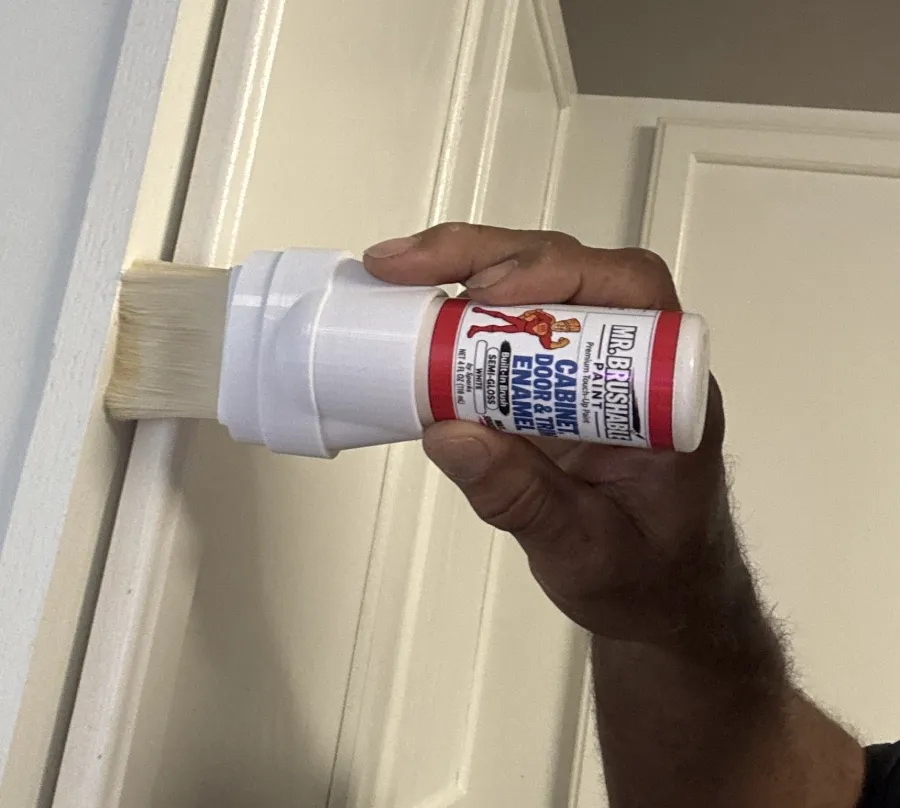
Kitchen cabinets take a beating. Doors get bumped by pots, edges get chipped by rings and keys, and the area around the handles wears down from hands all day. The good news: you almost never need to repaint the whole cabinet. A small, careful touch-up fixes most of it in minutes.
What you need
- A mild cleaner and a soft cloth
- Fine sandpaper or a sanding sponge (only for rough chips)
- Touch-up paint that matches your cabinet color and sheen
- A small brush, or a bottle with the brush built in
Step 1: Clean the spot
Kitchen cabinets collect grease, especially near the stove and handles. Paint won't stick well to grease. Wipe the chip or scuff with a mild cleaner, rinse with a damp cloth and let it dry completely.
Step 2: Smooth any rough edges
If the chip has raised or flaking edges, lightly sand just that spot so it's smooth. Wipe away the dust. Skip this step for a simple scuff.
Step 3: Match the color and the sheen
Most painted kitchen cabinets are semi-gloss or satin, because a shinier finish is easier to wipe clean. If you touch up a semi-gloss cabinet with flat wall paint, the spot will look dull even when the color is right. Match both the color and the shine.
Step 4: Apply a thin coat, only on the damage
Put a small amount of paint right on the chip or scuff. Keep it thin and stay inside the damaged area. A thick blob or a wide patch is what makes a touch-up stand out. With a built-in brush bottle, squeeze gently to feed paint into the brush, dab it on the spot and cap it when you're done. There's no brush to wash.
Step 5: Let it dry, then add a second thin coat if needed
Let the first coat dry fully. If the old color still shows through, add a second thin coat. Two thin coats look better than one thick one.
Tips for a fix that blends in
- Test first. Try the paint on the inside of a door or a hidden edge before the front.
- Check in daylight. Kitchen lights can hide a sheen mismatch that daylight shows.
- Don't over-brush. Lay the paint on and leave it. Brushing back and forth as it dries leaves marks.
- Let it cure. Go easy on the spot for a few days before scrubbing it.
When a touch-up isn't enough
If the finish is peeling across a whole door, the wood is swollen from water, or the color has faded unevenly, a touch-up won't hide it. That door needs to be refinished. For chips, scuffs and worn edges, a touch-up is usually all it takes.
Also works on
Squeeze. Brush. Done.
Touch-up paint with the brush built into the bottle, from $8.99. Free U.S. shipping on orders $25+.