What to know when choosing a private-label built-in paint applicator
Choosing a private-label paint applicator? Assess bottle format, coating compatibility, samples, branding, and pilot requirements for your product line.
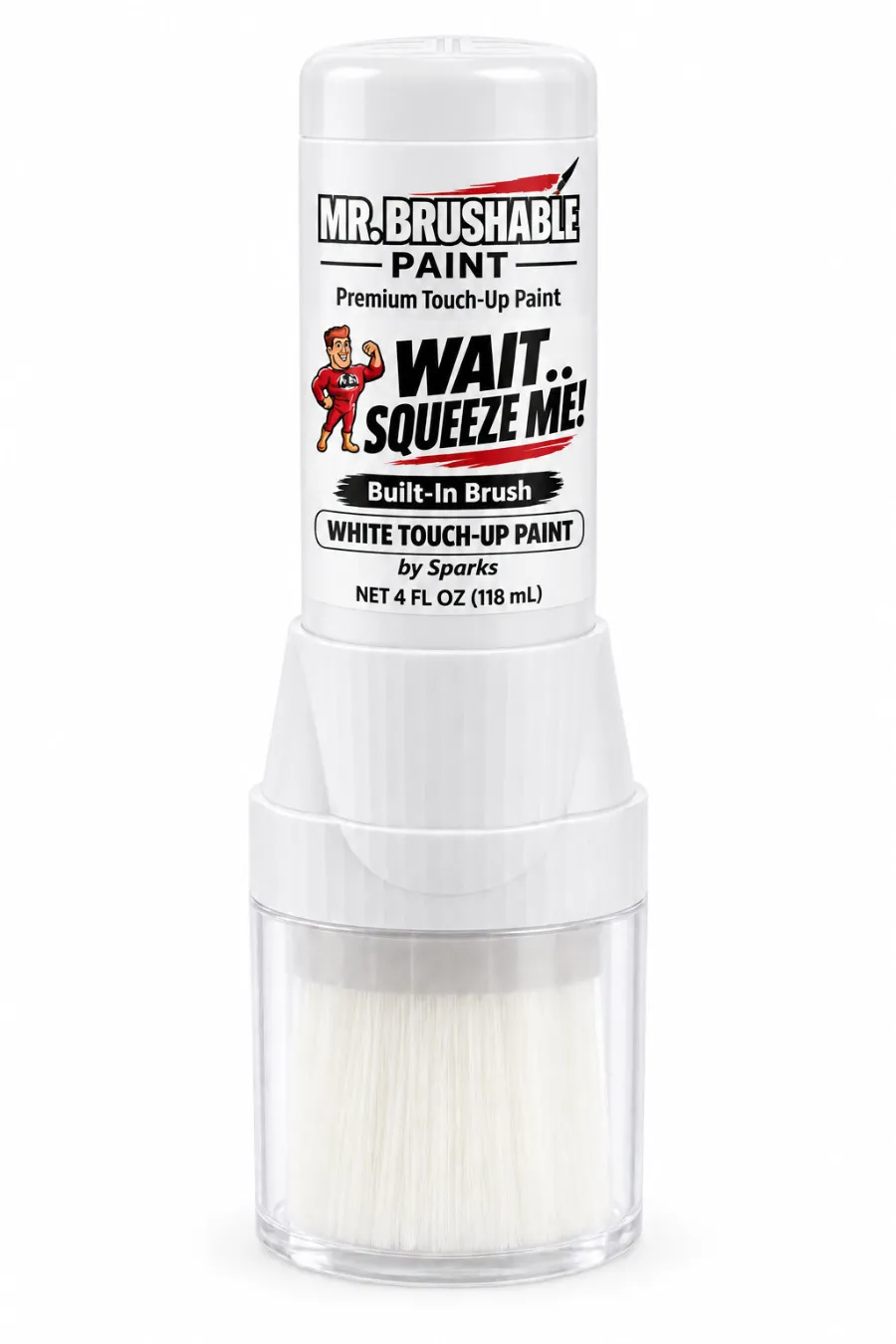
A private-label paint applicator is worth considering when your product line needs a small-repair format that keeps paint and its application tool together. Choose it for a specific customer task, such as touching up a trim chip, rather than simply adding your logo to another package. Make the buying decision around the intended coating, application pattern, and filled or refillable format.
Partner with us →
Table of contents
- Match the private-label paint applicator to one customer task
- Define what your private-label paint applicator includes
- Test the coating through the complete package
- Compare the quote with your launch requirements
- Make the pilot answer the launch decision
Match the private-label paint applicator to one customer task
Mr. Brushable™ offers a patent-pending built-in applicator design that can carry almost any applicator under a partner's brand. For a paint brand, retailer, or maker, the useful starting point is an integrated bottle designed around how the customer will apply the product, rather than a separate bottle-and-tool purchase.
Write a one-sentence product brief before choosing a head: who uses it, on which surface, with which coating, and for what repair. A trim-chip bottle needs controlled placement along an edge. A wall-scuff bottle needs an application pattern appropriate to the surrounding surface. Those are different product requirements even when both contain touch-up paint.
Define what your private-label paint applicator includes
A private-label built-in applicator combines the partner's branding with an application tool integrated into the bottle. This makes it relevant to a brand seeking an integrated, filled presentation for an existing coating.
Separate that proposal from a consumer-fill product in your brief. State whether the customer receives ready-to-apply paint or an empty bottle to fill later. Then assign responsibility for filling, color identification, closure assembly, and instructions. Treat those responsibilities as commercial requirements to agree, rather than assumptions attached to the term private label.
For your own product brief, request the intended fill volume, bottle dimensions, bottle material, applicator dimensions, and closure arrangement. Explain why each matters: shelf space constrains the footprint, the customer task guides the head shape, and the filling process needs a defined opening and assembly sequence.
Test the coating through the complete package
Evaluate a private-label paint applicator with the exact coating you intend to sell. Record the formulation identifier, sheen, color, and the conditions used for each trial. Avoid making a launch decision from an empty bottle demonstration alone: your proposed product is the coating and package working together.
Ask the sample team to demonstrate first use, paint delivery during application, recapping, and use after storage. Define observable outcomes beforehand. For example, require paint to reach the working surface without an unwanted puddle and require the cap to be removable after the agreed storage interval. Set acceptance thresholds with the people responsible for the formulation and package.
Keep the records specific enough to reproduce. Photograph the application on the intended substrate, retain the sample identifier, and note the storage conditions before reopening. If a result changes, repeat the same sequence before changing the coating, head, or closure. This is a proposed evaluation process, not a claim that a particular supplier has completed those tests.
Compare the quote with your launch requirements
For a private-label paint applicator, request pricing against a defined specification and quantity. Ask about partnership pricing and minimums for your proposed product and order volume rather than using retail touch-up paint prices.
Ask for a quote that separates the filled unit, branding work, setup charges, sample work, freight, and any additional packaging. Specify which items you expect in the delivered unit. A bottle-only figure and a filled, labeled, packed-unit figure answer different budgeting questions.
Build the schedule from the approvals your team actually needs. Request dates for samples, artwork approval, production readiness, and delivery to the intended US destination. Name the person approving each stage, and ask how a change to the coating or artwork affects the schedule. These are requested terms for your order, not promised service levels.
Give the private-label paint applicator a clear commercial role, too. Decide whether it will be an add-on beside a larger paint purchase, a dedicated touch-up item, or part of a repair kit. Choose one role for the initial budget so the packaging and presentation serve the same sale.
Keep the budget attached to that exact proposal. Revise the unit count or specification explicitly instead of comparing totals for different deliverables.
For a hypothetical pilot, suppose the quoted filled units cost $4.00 each and the order contains 200 units: 200 × $4.00 = $800.00. Adding a hypothetical $150.00 setup charge gives $800.00 + $150.00 = $950.00 before freight and taxes; these illustrative amounts are not a supplier quote.
Make the pilot answer the launch decision
Propose a partnership evaluation sequence covering an introductory call, any needed NDA, samples, a limited pilot, and contract terms. That sequence gives brands a defined route from an initial application idea to a product trial.
Make the pilot narrow enough to answer a buying question. Choose one coating, one customer task, and one retail presentation. Give testers the instructions intended for the package, rather than coaching them through every movement. Record where they pause, how they start paint flow, and how they recap the bottle.
Prepare the approval brief around four decisions:
- Application: Does the sample deliver the intended repair on the intended surface?
- Repeat use: Does it meet the agreed reopening and dispensing criteria?
- Presentation: Can customers identify the coating, color, sheen, and intended use?
- Order readiness: Does the quoted specification match the approved sample and launch quantity?
Frequently Asked Questions
Is private labeling the same as licensing the applicator design?
Private labeling concerns a product sold under a partner's brand, while licensing concerns permission to use a design. These are different arrangements to discuss around your intended product line.
Can a maker propose a different applicator concept?
A maker with a different applicator concept should ask whether design development and prototyping are available. Describe the application task and desired dispensing behavior when proposing the concept.
Should every paint color become a separate launch item?
Start your private-label paint applicator proposal with the colors needed for the chosen customer task. Request quantities and artwork requirements by color so the commercial discussion reflects the actual assortment rather than one combined bottle count.
Ready to put the brush in the bottle under your brand? Get the Partner Deck →
Mr. Brushable™ was invented in Raleigh, North Carolina by David Sparks. Patent pending.
Squeeze. Brush. Done.
Touch-up paint with the brush built into the bottle, from $8.99. Free U.S. shipping on orders $25+.