
Paint undertones & sheen: 9 things to know before you touch up
Why paint looks different on the wall than the chip: warm vs cool undertones, how to spot them, matching white trim, and choosing the right paint sheen.
You picked a color, it looked perfect on the little chip, and on the wall it looks… off. Too pink. Too yellow. A little green. Or your touch-up is the right “white” but it still doesn't match. Nine times out of ten the culprit is one of two things: paint undertones or paint sheen.
Here are 9 things every homeowner, renter, landlord and DIYer should know before picking a paint color or doing a paint touch-up.
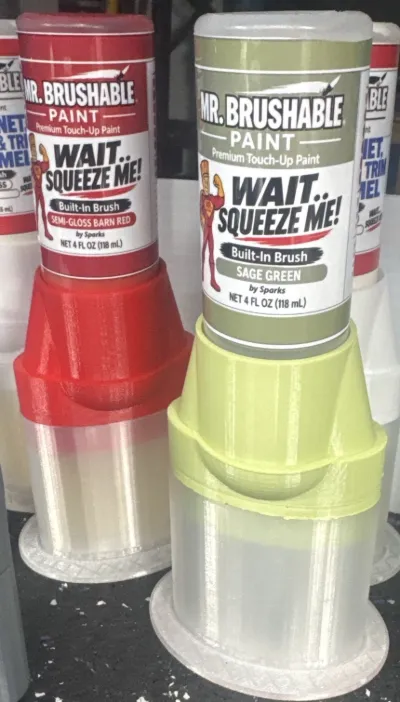
Mr. Brushable™ — The Bottle Is the Brush.
Part 1: Paint undertones
1. Every color has a main color and an undertone
The main color (the mass tone) is what you notice first: beige, gray, white, blue. The undertone is the hint of another color mixed underneath it, like a touch of pink in a beige, green in a gray, or yellow in a white. You may not notice it on a small chip, but on a big wall it comes through.
2. Undertones matter most in whites, grays and neutrals
Bold colors like a bright red or navy are mostly what they look like. Soft colors are different. White paint undertones, gray undertones and beige undertones are where most “that's not the color I picked” moments happen, because there's so little main color that the undertone stands out.
3. Warm vs. cool undertones
- Warm undertones: yellow, red, orange or pink. They feel cozy and creamy. Think off-white, antique white, ivory and warm beige.
- Cool undertones: blue, green or violet. They feel crisp and fresh. Think bright white, cool gray and blue-gray.
4. How to see an undertone: compare it
Undertones are hard to spot by staring at one chip. The trick is comparison. Hold the chip against a plain sheet of white printer paper, or next to other colors in the same family. Next to pure white, a “white” with a yellow undertone will suddenly look creamy, and a gray with a blue undertone will look cooler.
5. Lighting changes undertones
The same paint looks different in different light. Warm, soft-white bulbs pull out warm undertones. Daylight bulbs and north-facing rooms pull out cool undertones. Always look at a sample on your actual wall in the morning, afternoon and at night before you commit.
6. Match your white trim to your wall's undertone
A warm wall color usually looks best with a warm white trim. A cool wall color usually looks best with a crisp, cool white. If your house already has a white on the trim and baseboards, keep using that same white everywhere. One consistent white ties the rooms together, and it makes touch-ups easy because you always know which white to grab.
Part 2: Paint sheen
7. Sheen is how shiny the paint dries
From least to most shine: flat or matte, eggshell, satin, semi-gloss and gloss. The color can be perfect, but if the sheen is wrong, a touch-up will still stand out as a dull or shiny patch.
- Flat / matte: hides bumps and imperfections. Great for ceilings, bedrooms, living rooms and textured walls.
- Eggshell / satin: a soft glow with easier cleaning. Common in living areas, hallways and kids' rooms.
- Semi-gloss / gloss: tough and easy to wipe. Best for trim, baseboards, doors, cabinets, kitchens and bathrooms.
8. Pick the sheen for the room's traffic
High-traffic rooms and surfaces get touched, bumped and scrubbed. That's why trim, doors and cabinets are usually semi-gloss. Low-traffic rooms can use a flat or matte finish that hides wall flaws. If you're not sure what's on your wall now, look for the leftover paint can label or test a small hidden spot.
9. Shinier paint shows more brush marks, so prep matters
The higher the sheen, the more it shows every stroke, drip and bump. Clean the spot, lightly scuff glossy surfaces so new paint grips, and apply thin coats. For small chips on semi-gloss trim and doors, a small brush gives you the most control.
Putting it together: touch-ups that match
- Match the undertone. Is your white crisp and cool or creamy and warm?
- Match the sheen. Trim and doors are usually semi-gloss. Walls are usually flat or eggshell.
- Test in your light on a hidden spot and let it dry before judging.
- Go thin. Two light coats beat one heavy one.
Quick answers
Why does my paint look different on the wall than on the chip?
Usually it's the undertone showing up on a big surface, the lighting in your room, or both. Test a larger sample on the actual wall.
What's the best white for trim?
The one that matches the undertone of your wall color, or the white already on your trim. Keep one white throughout the house.
Do I need a separate brush for touch-ups?
Always test in a hidden area first and follow the directions on the label.
Squeeze. Brush. Done.
Touch-up paint with the brush built into the bottle, from $8.99. Free U.S. shipping on orders $25+.